Overview:
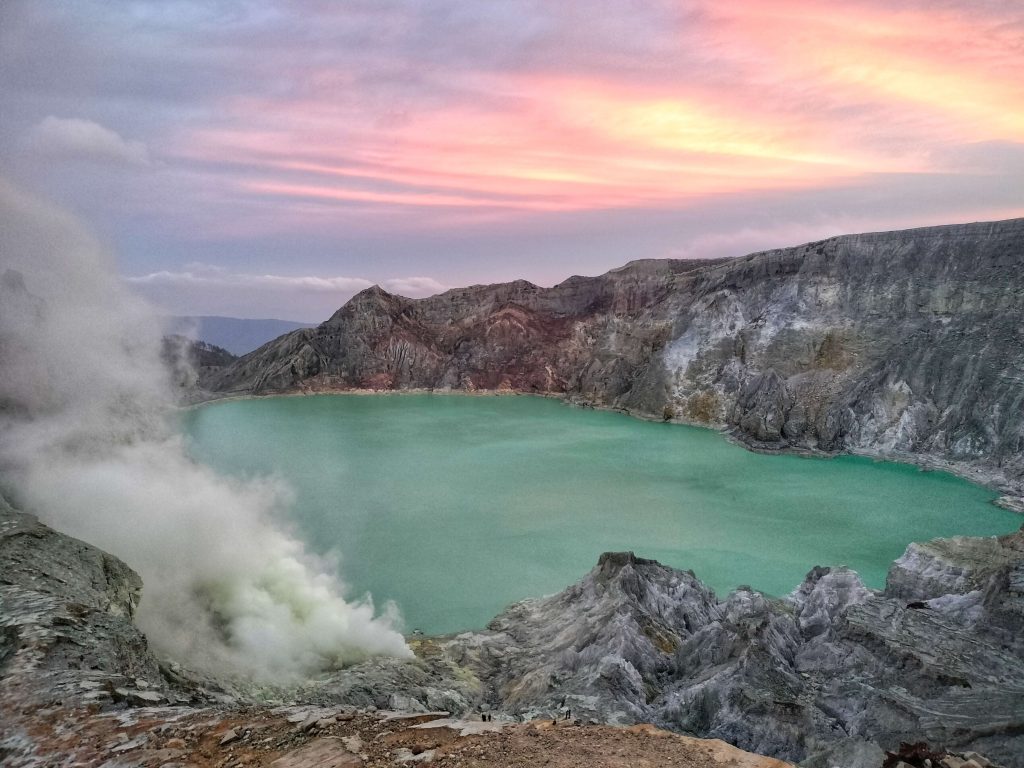
Ijen Crater is an active volcanic complex located in Banyuwangi, East Java, known for its dramatic landscapes and long-standing traditional sulfur mining activity.
This destination offers a rare combination of volcanic geology, a highly acidic turquoise crater lake, and local culture shaped by generations of miners working inside an active volcano.
Location: Banyuwangi and Bondowoso, East Java, Indonesia.
Main attractions: Active sulfur crater, volcanic lake, traditional sulfur miners
Ideal for: Adventure travelers, nature lovers, photographers, geology enthusiasts
Hiking level: Moderate (approximately 1.5–2 hours uphill hike)
Goal: To position Ijen crater as an educational and meaningful volcanic destination, not just a visual attraction.
Highlights & Best Viewpoints:
Active Volcanic Crater
Ijen crater is an active volcano where sulfur gas continuously emerges from the crater, forming solid sulfur deposits that are still manually extracted.
Turquoise Acidic Crater Lake
Home to one of the most acidic crater lakes in the world, the lake’s striking color reflects the volcanic minerals beneath the surface.
Traditional Sulfur Miners
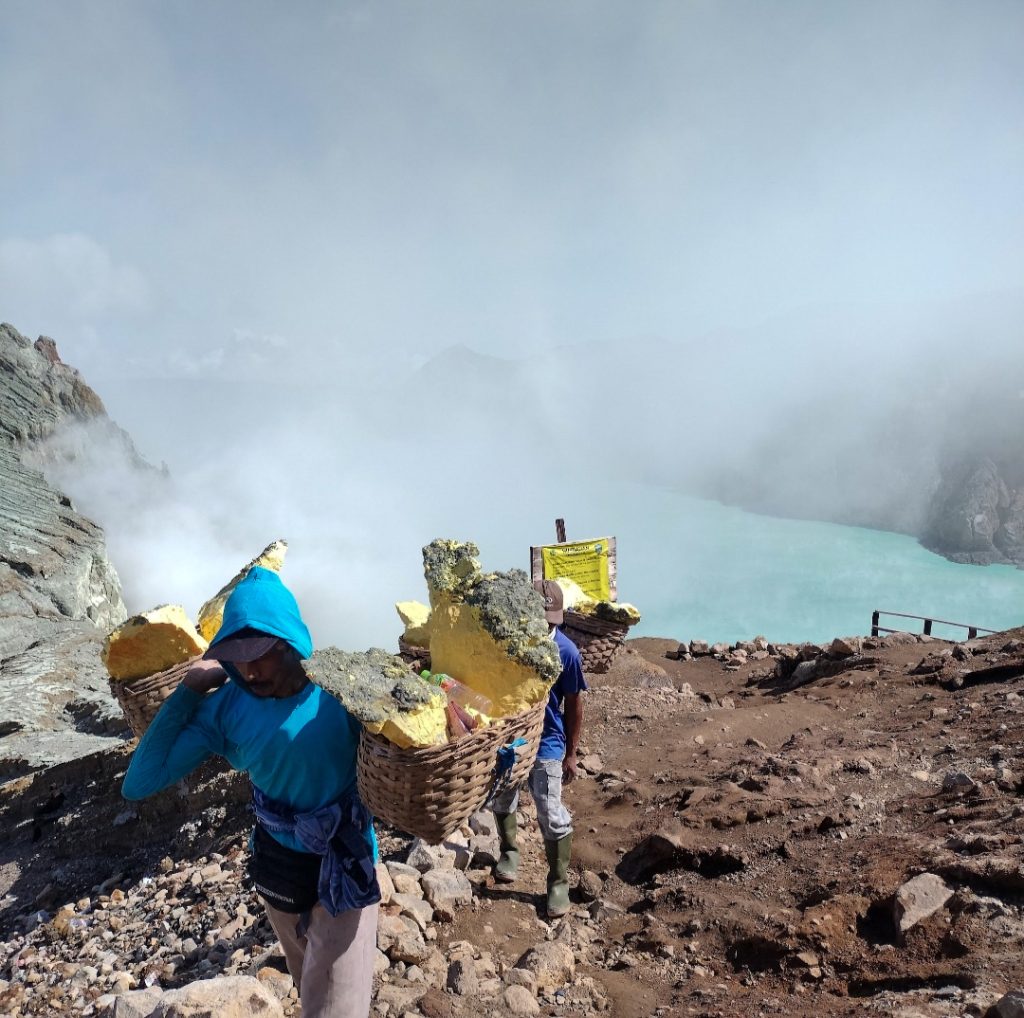
One of the most authentic aspects of Ijen is the presence of local miners who carry sulfur loads by hand—a rare example of traditional labor that still exists today.
Crater Rim Viewpoint
From the crater rim, visitors can enjoy wide views of the volcanic landscape, surrounding mountains, and sunrise over East Java.
How to Get There:
From Banyuwangi (Most Common Route)
Approx. 1 hour drive to Paltuding
1.5 – 2 hour hike to the crater rim
From Bondowoso (Alternative Route)
Longer travel time
Scenic mountain views along the way
Transport options:
Private car with driver
Jeep or Trooper 4×4
Motorbike (experienced riders only)
Organized tours
Best Time to Visit:
Dry season: April – October (best visibility and trail conditions)
Early morning: Cooler temperatures and clearer views
Avoid: Heavy rain and strong wind, as crater access may be temporarily closed
What to Expect:
Landscape: Volcanic terrain, steep crater walls, sulfur vents
Temperature: Cold at night and early morning (5–12°C)
Physical effort: Gradual uphill hike, manageable for most active travelers
Sulfur smell: Strong near mining areas (mask recommended)
Local culture: Daily sulfur mining activities within the crater
Travel Tips:
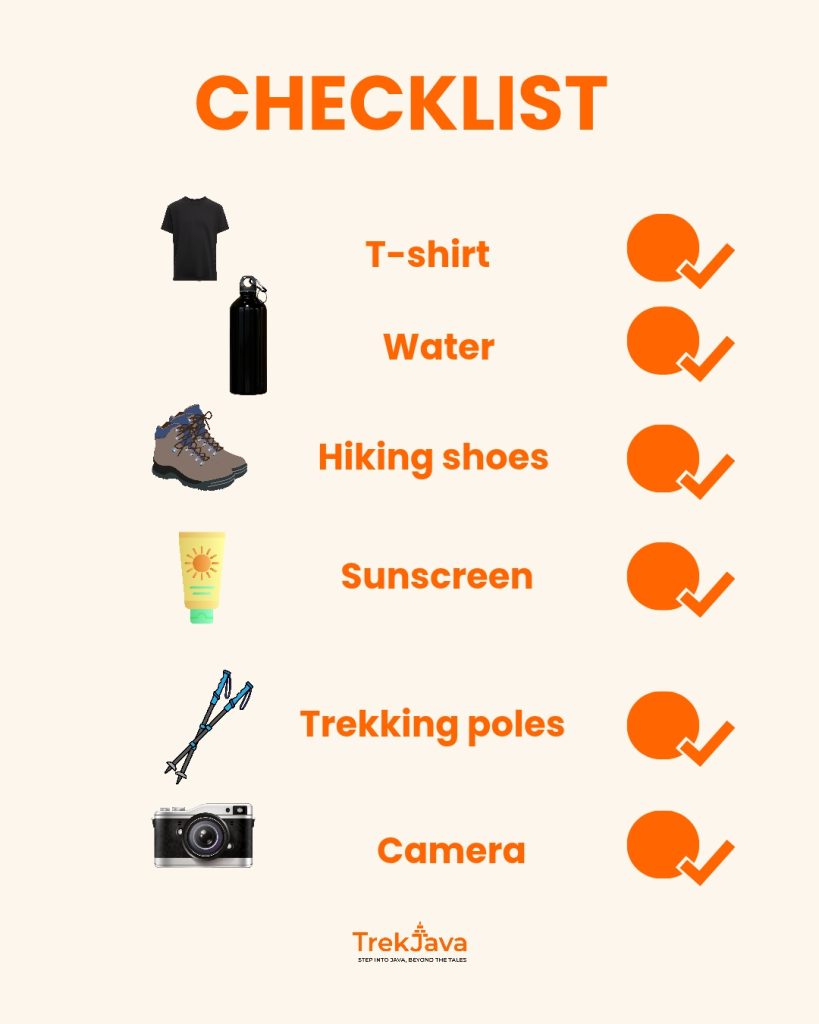
Wear warm layers and comfortable trekking shoes
Bring a headlamp for early starts
Use a gas mask near sulfur areas
Follow local safety instructions
Respect the work and space of sulfur miners
Check crater access status before visiting
Planning to visit Ijen Crater? Contact Trek Java for custom trip support.
Kaliklatak Plantation
A historic coffee and rubber plantation located on the slopes of Mount Ijen, rich in colonial heritage.