Overview:
Sukamade Turtle Conservation is one of the most authentic wildlife experiences in Java, located deep inside Meru Betiri National Park. This remote beach is known for its nightly sea turtle landings, where visitors can witness mother turtles laying eggs under ranger supervision. The journey involves jungle roads, river crossings, and untouched nature—perfect for adventure travelers seeking something unique and meaningful.
Meru Betiri National Park, one of the largest protected rainforest areas in East Java, Indonesia. Covering more than 52,000 hectares, the park is home to diverse wildlife, tropical rainforests, pristine beaches, and several endangered sea turtle species.
Sukamade Beach is an important sea turtle nesting site on the southern coast of East Java. At night, sea turtles come ashore to lay their eggs, creating a unique wildlife experience for visitors.
Today, Sukamade is not only a conservation area but also a destination where travelers can learn about sea turtle conservation while experiencing the natural beauty and remote landscapes of Meru Betiri National Park.
Why Visit Sukamade Turtle Conservation?
Sukamade is one of the few places in Indonesia where visitors can observe sea turtles nesting naturally on a protected beach. Located deep within Meru Betiri National Park, this remote conservation area offers a unique blend of wildlife experiences, conservation education, and off-the-beaten-path adventure.
Reasons to visit Sukamade include:
- Watch wild sea turtles come ashore to lay their eggs at night.
- Join the baby turtle release program in the morning when hatchlings are available.
- Experience an exciting 4WD journey through rainforest, plantations, and river crossings.
- Learn about sea turtle conservation directly from local rangers.
- Visit one of East Java’s most remarkable wildlife destinations.
> 6-Day East Java Adventure Tour with Sukamade Turtle Conservation
4WD Adventure to Sukamade
The journey to Sukamade is part of the adventure. The road to the turtle conservation area is still largely natural, with rough and uneven sections that are similar to an off-road route.
For this reason, a 4WD vehicle is highly recommended for the journey. The route passes through the rainforest of Meru Betiri National Park, Sukamade Plantation, which is known for its rubber and coffee plantations, and several river crossings.
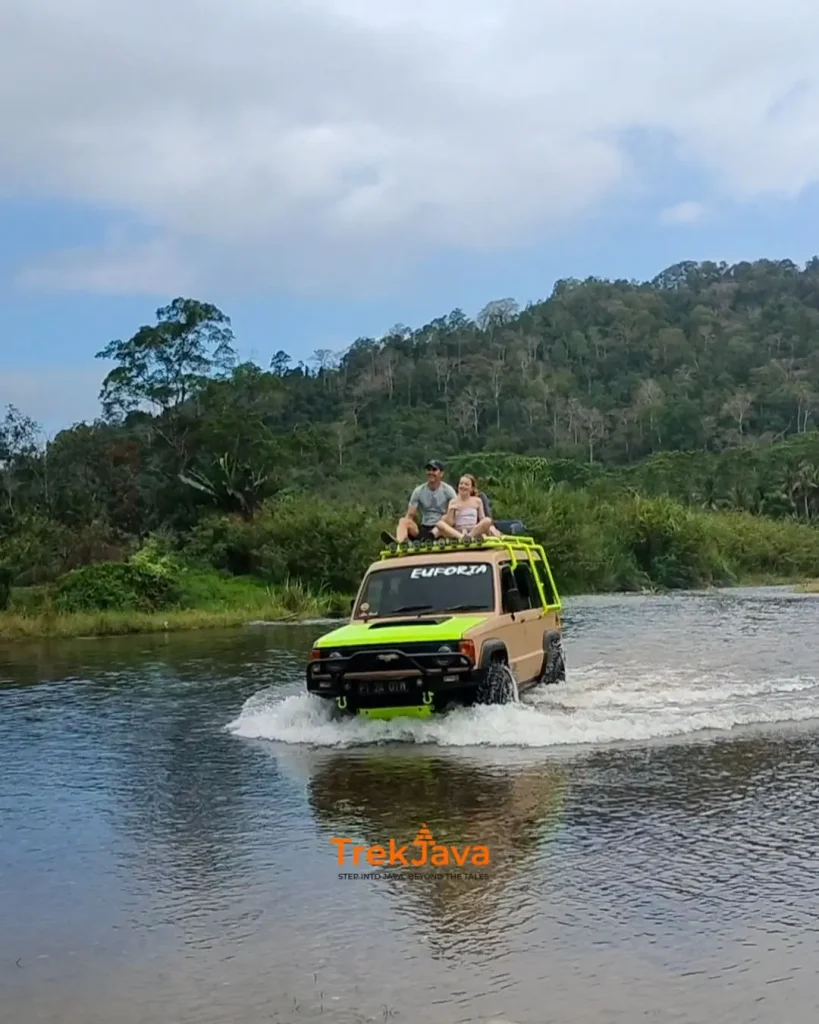
There are three rivers along the route where bridges are not available. During the rainy season, water levels can sometimes become too high for even 4WD vehicles and trucks to cross. When this happens, the journey may continue by using a traditional raft operated by local residents.
These challenging road conditions are part of what makes traveling to Sukamade feel like a genuine adventure rather than an ordinary sightseeing trip.
Turtle Species Found in Sukamade
Four sea turtle species have been recorded nesting on Sukamade Beach, although some are encountered more frequently than others.
| Species | Scientific Name | Chance of Seeing |
| Green Turtle | Chelonia mydas | Very High |
| Olive Ridley Turtle | Lepidochelys olivacea | Moderate |
| Hawksbill Turtle | Eretmochelys imbricata | Rare |
| Leatherback Turtle | Dermochelys coriacea | Extremely Rare |
Among these species, Green Turtles are the most commonly observed nesting on Sukamade Beach, while Leatherback Turtles are exceptionally rare.
Green Turtle
The Green Turtle (Chelonia mydas) is a large sea turtle belonging to the Cheloniidae family. These turtles are commonly found in warm tropical and subtropical waters across different parts of the world.
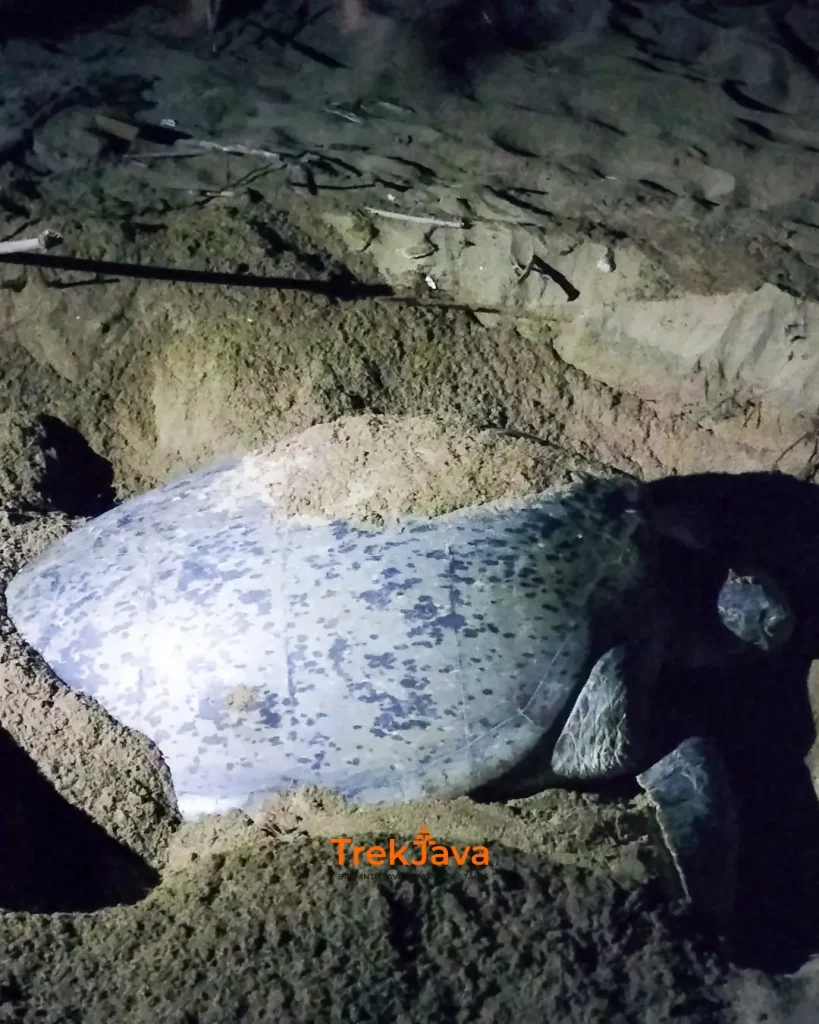
The species gets its common name from the greenish color of its body fat. Green Turtles are threatened by various human activities, including hunting, egg collection, habitat loss, and other pressures on their natural environment.
Green Turtles are one of the main species protected through conservation efforts at Sukamade.
Olive Ridley Turtle
The Olive Ridley Turtle (Lepidochelys olivacea) is a sea turtle found mainly in tropical and subtropical waters.
It is known for its relatively small size compared with some other sea turtle species and can be found nesting along beaches in the Indian and Pacific Oceans.
Olive Ridley Turtles are also recorded nesting at Sukamade, although they are less frequently observed than Green Turtles.
Hawksbill Turtle
The Hawksbill Turtle (Eretmochelys imbricata) is a critically endangered sea turtle belonging to the Cheloniidae family.
It can be recognized by its distinctive narrow, pointed head, curved beak, and overlapping shell plates. Hawksbill Turtles are closely associated with tropical coastal ecosystems and coral reefs.
Although Hawksbill Turtles have been recorded at Sukamade, nesting activity is considered rare compared with Green Turtles.
Leatherback Turtle
The Leatherback Turtle (Dermochelys coriacea) is the largest living sea turtle in the world and the only surviving species in the Dermochelyidae family.
The Leatherback Turtle has a unique body structure, with a flexible, leathery covering instead of the rigid shell found in most other sea turtle species. Instead, its back is covered by a flexible, leathery skin.
Leatherback Turtles are extremely rare at Sukamade. According to local conservation records, the last recorded nesting activity mentioned by Sukamade rangers was in 2012, with no further recorded nesting activity since then.
Night Turtle Watching
Night turtle watching is one of the most memorable experiences at Sukamade because visitors have the opportunity to observe sea turtles nesting naturally in their protected habitat.
The activity takes place at night and is conducted under the guidance of conservation rangers. Visitors must follow all instructions given by the ranger throughout the activity.
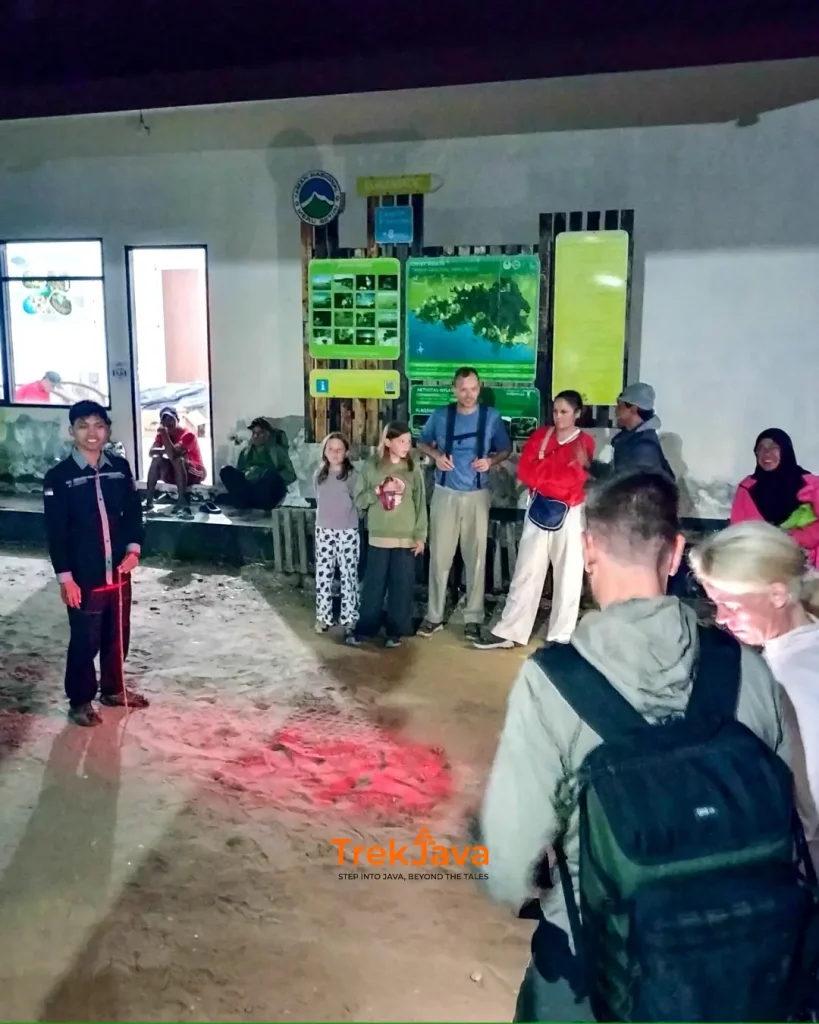
The turtles should always be observed from an appropriate distance without interfering with their natural behavior.
Night Turtle Watching Itinerary
6:00 PM — Dinner
Enjoy a local dinner if you are staying at accommodation in Sukamade.
8:00 PM — Ranger Briefing
Meet the ranger for a briefing before beginning the night turtle-watching activity. The ranger will explain what visitors should and should not do during the observation.
9:00 PM — Turtle Watching
Walk to the beach with the ranger and observe sea turtles coming ashore to lay their eggs. The ranger may also collect turtle eggs as part of the conservation program.
10:00 PM — Return to Accommodation
Return to your accommodation after the activity.
Please note that the exact timing may change depending on turtle activity, weather, tides, and instructions from the conservation team.
Why Is Flash Photography Not Allowed?
Flash photography can disturb nesting turtles and may cause them to return to the ocean before completing the nesting process.
Sea turtles are sensitive to artificial light, especially when they are coming ashore or laying their eggs. To minimize disturbance, visitors must not use flash photography and should follow the ranger’s instructions regarding lights and mobile phones.
Keeping quiet is also important because loud voices and sudden movements can disturb the turtles.
Baby Turtle Release
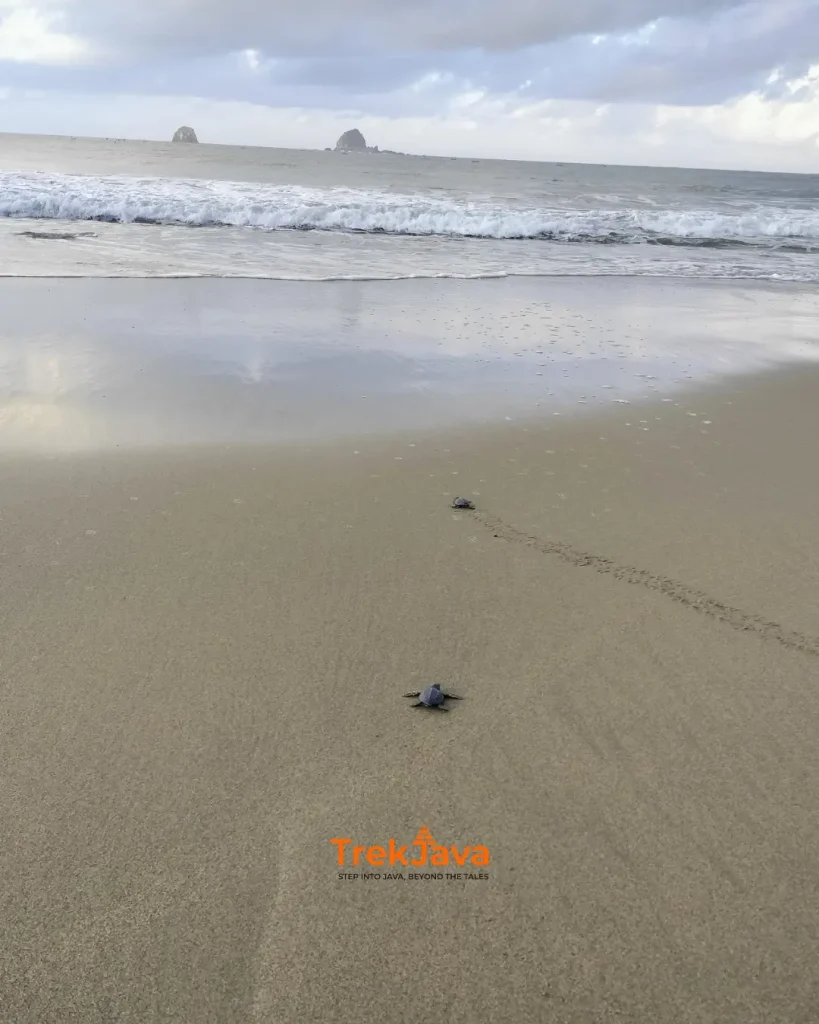
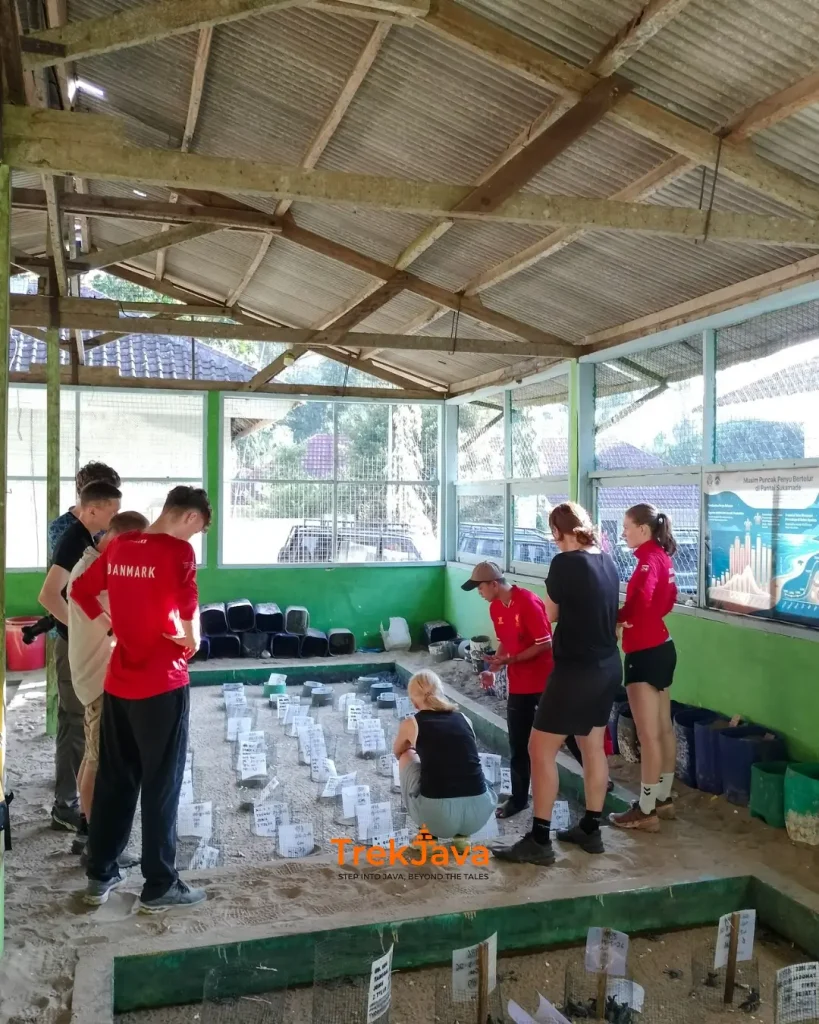
One of the activities that many visitors look forward to is the release of baby turtles, or hatchlings, at Sukamade Beach.
The activity usually takes place in the morning, around 6:00 AM, when a suitable number of hatchlings are available for release.
Participating in the release is not only a memorable experience but also an opportunity to learn about sea turtle conservation and the challenges hatchlings face in the wild.
The availability of baby turtles for release depends on the number of turtles nesting on the beach and the natural incubation and hatching period. Sukamade uses a semi-natural incubation system for sea turtle eggs, and the hatching process is also influenced by natural conditions.
For this reason, the baby turtle release program cannot be guaranteed every morning.
Conservation Rules
To protect the turtles and their natural habitat, visitors are expected to follow these conservation rules:
Do not touch the turtles.
Do not use flash photography.
Do not make loud noises.
Stay behind the ranger.
Do not shine lights directly at nesting turtles.
Follow the ranger’s instructions at all times.
Respect wildlife and its natural habitat.
Do not leave any trash behind.
Following these simple rules helps minimize disturbance and allows the turtles to complete their natural nesting process safely.
Where to Stay in Sukamade
There is simple accommodation available in the Sukamade area for visitors who want to stay overnight and join the night turtle-watching activity.
The guest houses are very basic, so visitors should not expect hotel-style facilities or luxury accommodation. The rooms are simple and provide basic facilities for an overnight stay. Air conditioning is not available.
Staying in Sukamade is more about experiencing nature and being close to the turtle conservation area than enjoying modern accommodation.
For travelers who are comfortable with simple facilities, spending a night here can be an important part of the Sukamade experience.
Sukamade Turtle Conservation Tour
Itinerary:
Day 1: Banyuwangi Area – Sukamade Area
10:00 AM — Pick-up
Pick-up at your location in the Banyuwangi area at 10:00 AM.
10:00 AM–3:00 PM — Drive to Sukamade
Drive to Sukamade, approximately 4–5 hours depending on road and weather conditions.
Travel by 4WD Jeep through the lush rainforest of Meru Betiri National Park. The journey includes bumpy and challenging off-road sections, three river crossings, plantations, and traditional villages on the way to Sukamade Turtle Conservation.
8:00 PM — Night Turtle Watching
Join the night turtle-watching activity at Sukamade Beach and observe sea turtles coming ashore to lay their eggs under the guidance of a local conservation ranger.
Day 2: Sukamade – Drop-off
6:00 AM — Baby Turtle Release
Join the baby turtle release activity at Sukamade Beach when hatchlings are available.
Breakfast
Enjoy breakfast with local food in the Sukamade area.
Check-out & Drop-off Service
Check out from your accommodation and continue with your drop-off service to your next destination.
Tour Finish
Your Sukamade Turtle Conservation experience comes to an end.
Nearby Attractions
If you have more time to explore East Java, Sukamade can also be combined with several other destinations:
> De Djawatan Forest
> Jagir Waterfall
> Alas Purwo National Park
FAQ
Is Sukamade worth visiting?
Yes. Visiting Sukamade is not just about sightseeing. It is also an opportunity to learn about sea turtles, their natural nesting process, and ongoing conservation efforts to protect them.
For nature and wildlife lovers, Sukamade offers the chance to see these ancient animals living and nesting naturally in their protected habitat. It is an experience worth including in an East Java itinerary.
Can children join the Sukamade turtle-watching program?
Yes. Children can join the program, making Sukamade an excellent educational experience for families.
It gives children the opportunity to learn about sea turtles, wildlife conservation, and the importance of protecting nature. It can also help children develop a greater appreciation and respect for wildlife and the natural environment.
Parents should consider the long 4WD journey, rough road conditions, and late-night turtle-watching activity when deciding whether the experience is suitable for young children.
Can I use my phone in Sukamade?
Yes. Mobile phone and internet access are available in the Sukamade area, although signal strength can vary depending on your network provider and location.
You can use your phone during your stay and capture memorable moments from your Sukamade adventure. However, during night turtle watching, please follow the ranger’s instructions and avoid using your phone or lights in a way that could disturb nesting turtles.
How difficult is the road to Sukamade?
The road to Sukamade is still relatively natural and includes rough, uneven sections similar to an off-road route.
For this reason, traveling by a 4WD vehicle is highly recommended. The journey can be bumpy and may include river crossings, particularly during the rainy season.
Can I see turtles every night?
Sea turtles regularly come to Sukamade Beach to lay their eggs at night. However, turtle watching is a wildlife experience, so sightings cannot be guaranteed every night.
The number of turtles coming ashore can vary depending on natural conditions, weather, tides, and the nesting cycle.
Can I release baby turtles?
Yes, visitors can participate in the baby turtle release program when hatchlings are available.
The activity usually takes place at around 6:00 AM. However, the availability of hatchlings depends on the natural nesting, incubation, and hatching cycles.
Therefore, a baby turtle release cannot be guaranteed every morning.
What should I bring to Sukamade?
For an overnight stay and night turtle-watching activity, we recommend bringing:
- Mosquito repellent.
- Long trousers.
- A jacket or warm layer for the night.
- A raincoat during the rainy season.
- Comfortable footwear suitable for uneven terrain.
Because Sukamade is located in a remote natural area, it is best to prepare the essentials you may need before starting your journey.
Is electricity available in Sukamade?
Yes. Electricity is available in the Sukamade turtle conservation area.
However, accommodation and facilities remain simple compared with hotels in Banyuwangi.
Can foreigners visit Sukamade?
Yes. Sukamade is open to both Indonesian and international visitors.
Foreign travelers are welcome to visit the turtle conservation area, learn about sea turtle conservation, and experience the nesting and hatchling release programs when available.
Visiting Sukamade can also be a meaningful way to learn about local conservation efforts through responsible tourism.
Is Sukamade safe?
Sukamade is generally safe when visitors follow the instructions provided by the conservation rangers.
During the night turtle-watching activity, visitors are accompanied by local rangers who explain what to do and how to behave around nesting turtles. Following their instructions is essential for both visitor safety and the protection of the turtles.
The journey to Sukamade also involves rough roads and river crossings, so visitors should be prepared for an adventurous 4WD journey.
Plan Your Sukamade Turtle Adventure
Experience one of Indonesia’s most remarkable wildlife adventures with Trek Java. Our private Sukamade tours include a 4WD vehicle, experienced local guides, and flexible itineraries.
Contact Trek Java today and start planning your Sukamade adventure.